Cracks in your pool come in many shapes and sizes. Some are just cosmetic. Some are real structural problems. Knowing the difference between cosmetic surface marks and structural cracks in your pool shell can save you thousands. It can also stop a slow leak before it drains the pool. Cracks in your walls at home and cracks in your pool follow the same rules. Your pool’s structural integrity depends on how you read each crack. This guide walks pool owners through how to spot a surface crack, how to spot a structural crack, and what to do about each one. Hairline cracks may be normal. A diagonal crack at a 45 degree angle is not. The difference between cosmetic and structural matters. Cracks and structural failure are linked. Cracks mean something. The right read leads to the right fix. Cracks in your home and cracks in your pool both need the same careful eye.
What Is a Surface Crack? Cosmetic and Non-Structural Cracks
A surface crack lives in the finish layer of the pool. It does not run deep into the concrete shell. Most surface cracks on a pool are mostly cosmetic. They look bad. They are not a safety risk and often do not leak.
Common types of non-structural cracks in pools:
- Hairline cracks in pool plaster from drying or minor settling
- Plaster crazing that forms during the concrete curing process
- Tile grout cracks from temperature changes and pool use
- Pool deck hairline cracks from sun and age
- Cosmetic crack lines in coping mortar from normal wear
A cosmetic crack is often less than one-sixteenth of an inch wide. It does not grow much. It does not have step patterns. It does not have wide gaps. Small cracks like these are common in every pool. You can fix most of them with epoxy filler, plaster patch, or fresh grout.
Shrinkage cracks deserve a quick note. New concrete pool shells crack as they cure. The cure pulls water out of the shell. The shell shrinks. Hairline cracks show up in the plaster. These cracks are usually fine. They do not mean the shell will fail.
Pool Cracks vs Home Cracks: Same Rules, Different Stakes
Pool shells and home foundations crack for the same reasons. Soil settles. Concrete shrinks. Pressure builds. The difference is in the stakes. Structural cracks in your home can lead to costly foundation repair and safety issues. The same crack patterns in your pool can drain thousands of gallons and ruin a season of swimming.
A few quick parallels every pool owner should know:
- A horizontal crack in your home’s basement wall is the same warning as a horizontal crack in your pool shell wall: hydrostatic pressure or shear stress
- Diagonal cracks at corners of openings in a building’s frame match diagonal cracks at corners of skimmer openings in a pool
- Foundation movement under a home creates the same crack patterns as ground shift under a pool
- A crawl space wall and a pool shell wall are both load-bearing concrete and react the same way to expansive soil
If you see a structural crack in your pool, check your home’s foundation too. The same soil that moved your pool may have moved your house. A structural engineer who looks at both at once can save you a second visit.
What Is a Structural Crack? When a Crack Becomes a Fracture
A structural crack runs deep through the pool shell. It tells you the concrete is under load it cannot hold. A structural crack is a fracture that needs care.
Common types of structural cracks in a pool:
- Vertical crack wider than one-eighth inch in a pool wall
- Horizontal crack running across the pool shell or bond beam
- Diagonal crack at a 45 degree angle, often at corners of openings around the skimmer or light niche
- Stair-step crack in any brickwork or block coping around the pool
- Shear cracks from seismic stress or ground movement under the shell
The key feature of a structural pool crack is width and pattern. A vertical crack wider than one-eighth inch in a shell wall is a red flag. A horizontal crack across a pool wall is worse. A diagonal crack at the corner of a skimmer cutout is a strong sign. Shear cracks run on an angle. Each of these crack types points to real structural problems with the pool.
A structural crack does not heal. It grows. Left untreated, it leads to deterioration of the pool shell. In a major event, it can lead to structural failure of the pool.
How to Read Cracks: Vertical, Horizontal, Diagonal, and Stair-Step
A crack’s direction tells you a lot. Read the line. See where it starts and where it stops. Note the width. Note any step or zigzag pattern.
| Crack Type | Likely Cause | Threat Level |
|---|---|---|
| Hairline crack in pool plaster | Shrinkage or minor settlement | Low, mostly cosmetic |
| Vertical crack in pool shell, under one-eighth inch | Concrete curing process | Low to moderate |
| Vertical crack wider than one-quarter inch | Soil settlement or expansive soils | High, structural |
| Horizontal crack across pool wall | Hydrostatic pressure or shear | High, structural |
| Diagonal crack at corners of skimmer or light niche openings | Shell movement or settling | High, structural |
| Stair-step crack in brickwork coping | Differential settlement | High, structural |
| Shear crack at a 45 degree angle in the shell | Seismic event or ground load shift | High, structural |
| Map cracks across plaster | Shrinkage during cure | Low, surface |
A discontinuous crack that breaks into many short lines is often shrinkage. A long, clean crack that does not stop is often structural. The pattern is the clue.
Common Causes of Cracks in Your Pool
Many things cause cracks in a pool shell. Some are normal. Some are serious. Here are the main causes to know:
- Concrete curing: New pool shells shrink as they dry. This causes small hairline cracks during the first year.
- Temperature changes: Hot and cold cycles make plaster and concrete expand and contract. Hairline cracks show up over time.
- Soil settlement: The dirt under your pool settles in the first years. Some minor settlement is normal. Heavy settlement causes structural damage to the shell.
- Expansive soils: Clay-heavy soil swells when wet and shrinks when dry. This puts cycle stress on the pool shell and deck.
- Hydrostatic pressure: Ground water under an empty pool can push the shell up. The pressure can crack a wall in a horizontal line.
- Poor drainage: Water that pools near the pool foundation causes soil to shift and shell walls to bow.
- Seismic event: Earthquakes shake the whole pool. Shear cracks at a 45 degree angle are common after a quake.
- Water intrusion: Water in the wrong spot rusts steel reinforcement inside the shell. The rebar swells. The concrete cracks open.
- Tree roots: Roots near the pool can lift the deck and crack the shell wall over time.
- Original build flaws: A weak pour or thin shell wall can cause cracks years after build.
Knowing the cause helps you pick the right repair. A shrinkage crack does not need the same fix as a shear crack. Cause and severity drive the choice. Many cracks are often the first warning of bigger foundation issues under the pool. Tensile stress, shear stress, and load-shift stress each leave a different mark. Cracks due to stress in load-bearing shell walls point to real structural issues that need a pro.
Warning Signs That Mean Structural Problems
A crack alone is not always a crisis. But a crack with other signs is. Watch for these warning signs around your pool:
- The pool water level drops faster than evaporation alone
- The auto-fill valve runs all day or kicks on too often
- Soggy ground or wet spots in the yard near the shell
- Pool deck has shifted, tilted, or sunk in spots
- Sloping floors or uneven floors on the pool deck around the coping
- Tile lifting off the bond beam or pulling away from the wall
- New gaps in the corners of openings around the skimmer or light niche
- Cracks that grow wider month over month
- Visible displacement where one side of a crack has moved past the other
- Water intrusion through a crack after rain or pump runs
- A bowing pool wall on the deep end
In a home, similar warning signs show up as sticking doors that used to open with no effort, or new gaps in the corners of doors or windows. In a pool, the gaps show up in the coping and at the skimmer. The same forces are at work. The pool just shows the cracks faster.
Any one of these with a crack means you need a closer look. Two or more together require urgent attention. A bowed wall, a wide diagonal crack, and a tilted deck is a clear structural failure warning. Do not wait. Call a pro.
When to Call a Structural Engineer: Civil Engineering Basics
A structural engineer is a licensed civil engineering pro who can read the full picture. They look at the crack. They look at the soil. They look at the pool shell design. They write a report that tells you the cause and severity of the damage.
Call a structural engineer for your pool when:
- A crack is wider than one-quarter inch in the shell
- You see horizontal cracks across a pool wall
- A diagonal crack runs from a skimmer or light niche corner
- You see sloping or uneven floors on the deck with new cracks
- Cracks grow after a seismic event
- You suspect ground movement or soil shift under the pool
- You want a professional evaluation before any major repair
A structural engineer report is gold. It guides every next step. It also protects you if you sell the home. The cost of a professional inspection is small next to the cost of a wrong repair on a pool shell.
Crack Type to Repair Map
Once you know what kind of crack you have, you can pick the right fix. Each crack type has a best repair path.
| Crack Type | Right Repair | Who To Call |
|---|---|---|
| Hairline plaster crack in pool | Plaster patch or pool putty | DIY |
| Shrinkage crack in new pool shell | Crack Fix Epoxy fill | DIY or pro |
| Vertical pool shell crack under one-eighth inch | Epoxy injection | Pool tech or pro |
| Vertical or diagonal structural crack in shell | Torque Lock staples | Torque Lock pro |
| Horizontal crack across pool wall | Engineer review, then Torque Lock staples | Structural engineer plus Torque Lock pro |
| Stair-step crack in brick coping | Repoint mortar, address shell cause | Mason and structural engineer |
| Shear crack from seismic event | Torque Lock staples plus retrofit | Torque Lock pro and engineer |
This map keeps you out of the wrong-repair trap. A surface fix on a structural crack is a waste of time and money. A structural fix on a surface crack is overkill. The proper repair depends on the cause and the type of crack. Match the repair to the crack.
How Torque Lock Repairs Structural Cracks in Pools
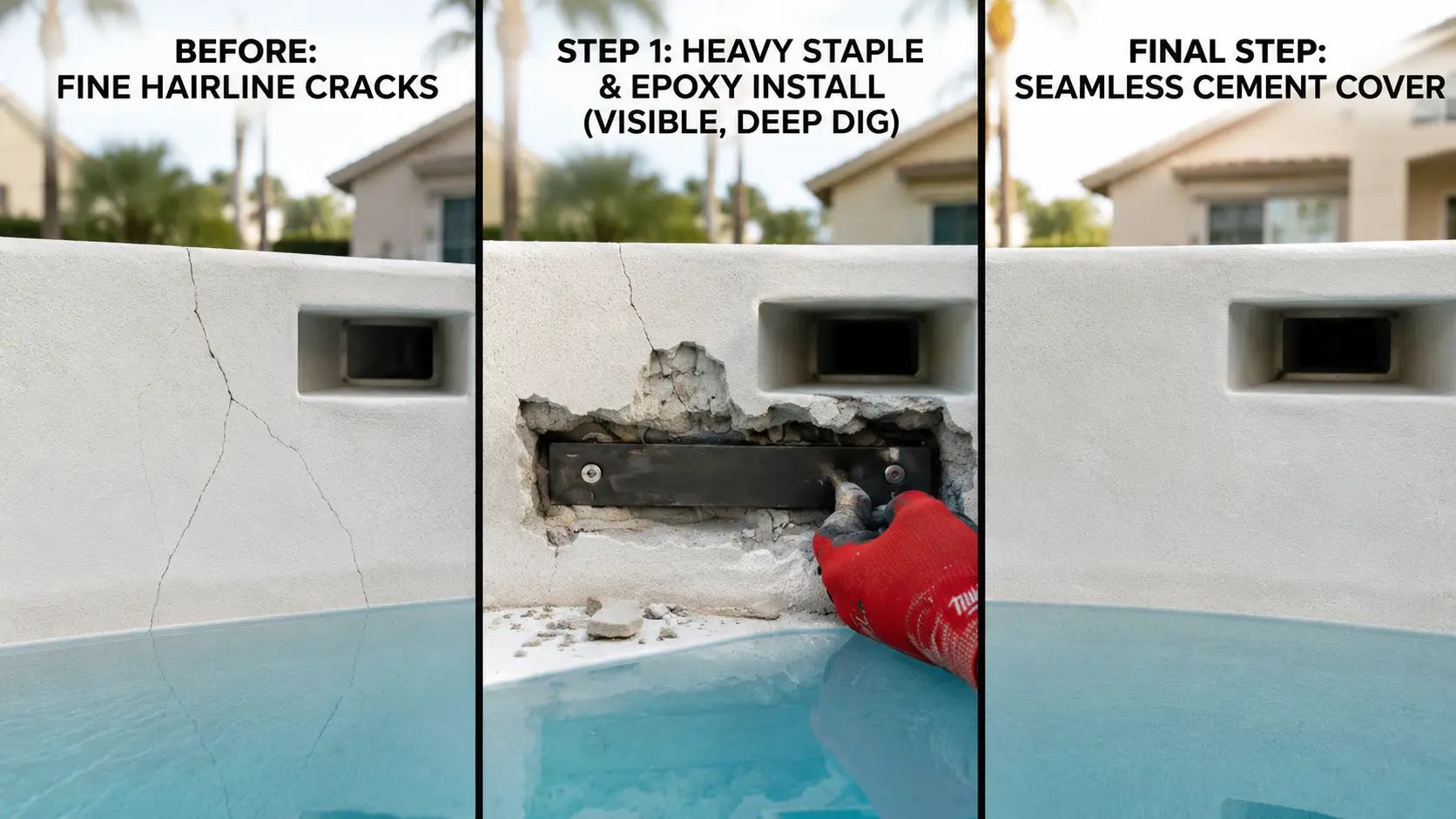
When a crack in your pool shell is structural, Torque Lock is the long term fix. We make the only Controlled Post Tension Staple on the market. Each staple locks a concrete crack shut with up to 5,000 lbs of force. The patented Cam Lock design holds the crack closed for the life of the pool.
A Torque Lock repair works on cracks in:
- Pool shell walls and pool floors
- Pool decks and patio slabs near the pool
- Spa shells and spa walls
- Bond beams and coping joints
- Retaining walls around the pool
- Pool equipment pads and pump house slabs
The install is direct. A trained pool tech grinds a shallow channel across the crack. They drop in the right Torque Lock staple. They set the cam lock with a torque wrench. The crack is now under tension. No more growth. No more movement. In most cases the pool stays full during the repair.
Torque Lock product line for pool crack repair:
- TL-10 Staple Kit: Small structural cracks in pool shells and decks
- TL-30 Staple Kit: Mid-size cracks in pool shell walls
- TL-50 Staple Kit: Large cracks in heavy concrete pool shells and load-bearing walls
- TL-12″ and TL-18″ Staple Kits: Long crack runs across pool floors and walls
- TLR-45 and TLR-90 Staple Kits: Corner cracks where pool wall meets floor or coping
- Crack Seal Flexible Membrane: Watertight seal over each staple
- Quick Lock Hydraulic Cement: Fast set patch for active pool leaks
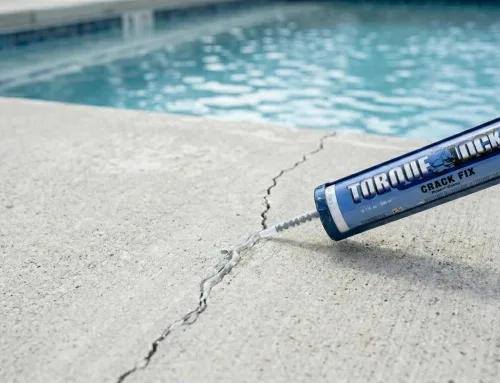
- Crack Fix Epoxy: Bonds the crack before stapling
The staple does the structural work. The epoxy bonds the faces. The membrane seals the line. Together they stop the crack and stop the leak.
Fixing Surface and Cosmetic Pool Cracks
A cosmetic crack in a pool does not need a structural pro. A pool owner can handle most surface cracks in an hour. Here is the basic approach:
- Hairline cracks in pool plaster: Clean the line. Inject Crack Fix Epoxy or use pool putty. Smooth.
- Tile grout cracks: Remove old grout. Re-grout the line. Seal.
- Pool deck surface cracks under one-eighth inch: Concrete crack filler from any hardware store
- Coping mortar hairline cracks: Repoint with new mortar matched to the original color
- Plaster crazing across a wide area: Plan a future replaster, but no urgent repair needed
Address surface cracks promptly. Even a cosmetic crack can let in water. Water intrusion turns a small surface crack into a bigger problem when it reaches the rebar. Catch it early.
“We see pool owners every week who waited too long on a small crack. The fix was a forty-dollar tube of epoxy. They ended up with a four-thousand-dollar pool shell repair. Issues promptly addressed save real money,” said a Torque Lock field tech in Agoura Hills.
Why Pool Owners Trust Torque Lock for Structural Cracks
Torque Lock Structural Systems is based in Agoura Hills, California. We have made structural crack repair products for years. Our team has worked with structural engineers, pool builders, and pool owners across the country.
Our products are used at NASA, Marriott, Siemens, the University of Texas, and many homes and pools coast to coast. We ship kits with full instructions. We also offer the Torque Lock Structural Repair Training Course. Pool techs and contractors can take the course and earn the skills to stop a structural crack on the spot.
When the crack in your pool is real, the fix has to be real too.
Ready to Tell Cosmetic Cracks from Structural Ones?
A crack in your pool is not always a crisis. But it is always a clue. Read it. Measure it. Match it to the right repair. If the crack is cosmetic, fix it at the pool with epoxy or plaster patch. If the crack is structural, call a pro.
For any structural crack in a pool shell, pool deck, or pool wall, call Torque Lock Structural Systems at (818) 436-2953. Email us at info@torquelock.com. Our hours are Monday through Friday, 7:00 AM to 3:30 PM PST.
Spot the crack. Read the crack. Lock the crack. Save the pool.